
A month of practical learning, research and developing confidence
September has been another full and rewarding month at BSET Academy, with students across both years continuing to develop their knowledge through a combination of practical work, research, case studies and hands-on experience.
One of the most important aspects of training at BSET Academy is learning to connect theory with the horse standing in front of you. No two horses are exactly alike, and developing as an equine practitioner requires far more than simply learning techniques. It requires observation, curiosity, critical thinking, adaptability and, importantly, experience.
Throughout September, our students have had opportunities to strengthen all of these skills from focused research projects and practical treatment sessions to fieldwork and valuable real-world learning experiences.
2nd Years: From Study to the Field
For our second-year students, September has brought plenty of opportunities to take their learning further, combining more advanced research with practical application and real-life cases.
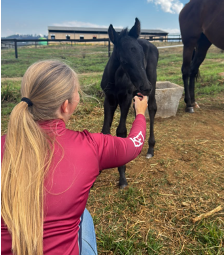
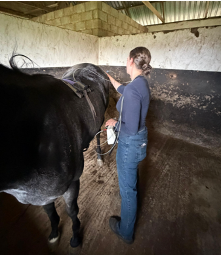
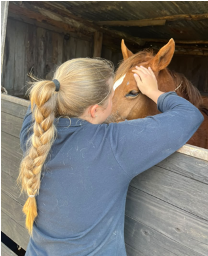
Alongside their academic work, the second years continue to gain valuable experience through fieldwork and real-life cases. There is no substitute for working with a wide variety of horses. Different breeds, disciplines, ages, workloads, temperaments and histories all present students with something new to consider.
A horse may arrive with an obvious area of concern, while another may require much more careful observation before a broader picture begins to emerge. Each case therefore becomes an opportunity to practise assessment, observation, palpation and problem-solving while developing confidence around the horse.
Importantly, students also learn that there is rarely a “one-size-fits-all” approach. Every horse is an individual, and becoming a good practitioner means learning to listen to what that individual horse is showing you.

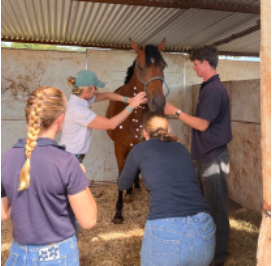
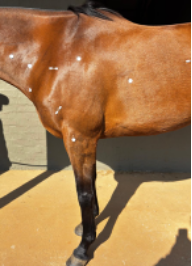
Nerve Spot Study
The second years have been conducting a nerve spot study, taking a closer look at the identification and observation of nerve spots and considering what these findings may indicate within the individual horse.
Rather than viewing one area of the horse in isolation, students are encouraged to consider how their observations fit into the broader physical picture.
This process develops an increasingly important skill for any practitioner: learning to observe carefully, question what they are finding and consider how different pieces of information may relate to one another.
Through practical assessment, observation and analysis, the students are continuing to develop a more comprehensive approach to evaluating the horse as a whole.
RTI Projects: Rider Transeva Integration
The second years are also busy with their Rider Transeva Integration (RTI) projects, which provide an opportunity to bring together many of the concepts and skills developed throughout their BSET studies.
The projects encourage students to research, investigate and think critically while exploring the relationship between horse and rider within a more focused setting.
Independent project work is an important part of their second year. Students are required not only to apply what they have learnt but also to ask questions, document their observations and evaluate their findings.
It is another step towards developing practitioners who are confident in their knowledge while remaining curious and willing to continue learning.
1st Years: Building Strong Foundations
While the second years are progressing into more advanced research and casework, our first-year students are continuing to establish the foundations upon which their future practical work will be built.
This stage of their training is about developing good habits: learning to observe carefully, becoming familiar with the horse’s body and movement, understanding the principles behind what they are doing and gradually developing confidence in their hands and decision-making.
Conditioning Projects
The first years are currently working on their conditioning projects, exploring the role appropriate conditioning plays in supporting the horse’s physical development, strength and ability to perform its work.
Conditioning is far more than simply making a horse “fit”. Students are beginning to consider factors such as the horse’s current level of fitness, workload, discipline, strength, movement and individual needs when thinking about an appropriate programme.
These projects help bridge the gap between theoretical learning and the practical realities of keeping horses physically prepared for the work expected of them.
They also encourage students to understand that good conditioning is progressive and individual. What is appropriate for one horse may not necessarily be appropriate for another.
Beginning Front-End Treatments
September also marks an exciting practical milestone for our first years as they begin working on front-end treatments.
Moving into a new area of practical treatment requires students to draw on the anatomy, observation and palpation skills they have been developing throughout the year.
Initially, every new technique requires concentration and guidance. With practice, however, students begin to recognise structures more confidently, refine their touch and become increasingly aware of the responses they receive from the horse.
It is wonderful to see that transition taking place — from carefully following each step to beginning to understand the reasoning behind what their hands are finding.
Confidence comes through practice, and these sessions provide an important foundation for the more advanced work still to come.
Taking BSET Beyond the Classroom
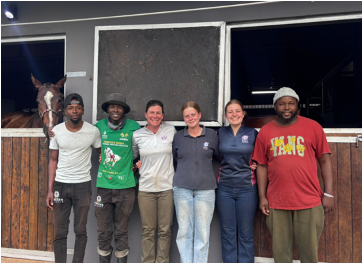
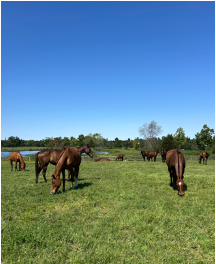
Learning at BSET Academy also extends well beyond our own training environment, and September provided a fantastic example of this when Robyn Butterworth travelled to the Western Cape to facilitate grooms training at African Polistas.
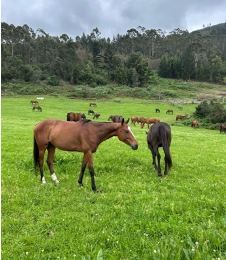
African Polistas, based in Kurland in the Western Cape, is a polo initiative and team where Robyn had the opportunity to work with an enthusiastic group of grooms and work riders. The willingness of the African Polistas team to learn made the experience particularly rewarding. Their staff were eager to ask questions, develop their knowledge and gain practical skills that could be taken directly back into their daily work with the horses.
Upskilling Grooms & Work Riders
During the visit, Robyn provided a combination of practical and theoretical training towards EQASA Module 1, while also assisting the team with areas including stable-yard management, riding, horse handling and everyday horse care.
Grooms and work riders play an enormously important role in the equine industry. They are often the people who spend the greatest amount of time with the horses and are therefore in a unique position to notice subtle changes in behaviour, condition, movement or general wellbeing. Providing opportunities for continued education and skills development helps empower these individuals with greater knowledge and confidence in the work they do every day.
For BSET Academy, sharing knowledge in this way is an important part of contributing to the broader equestrian community.
An Incredible Opportunity for Our Second Years
Robyn was joined on the trip by two of our second-year students, Jamie Williamson and Emily Bernhard, giving them another valuable opportunity to learn outside the traditional classroom environment.
Being immersed in a working polo environment exposed Jamie and Emily to different horses, management systems and the particular physical demands associated with the sport. Polo horses are athletes, and understanding the discipline gave the students another perspective from which to consider conditioning, movement, workload, horse management and performance.
They were also able to observe Robyn working with and teaching the African Polistas team, an important reminder that being an equine professional involves not only practical ability, but communication, collaboration and the ability to share knowledge effectively.
Experiences such as these are invaluable because they expose students to the realities of the wider equine industry.
Interested in studying at BSET Academy?
If you are passionate about horses and interested in developing practical, hands-on skills within the equine industry, applications to study at BSET Academy are welcomed.
Our programme combines theoretical learning with practical experience, research, case studies and exposure to real horses, helping students build both their knowledge and their confidence as they progress through their training.
Follow BSET Academy for more student experiences, case studies, practical learning and updates from life at the Academy.